Sunday, May 16, 2021

Show Biz

Show business is no business!
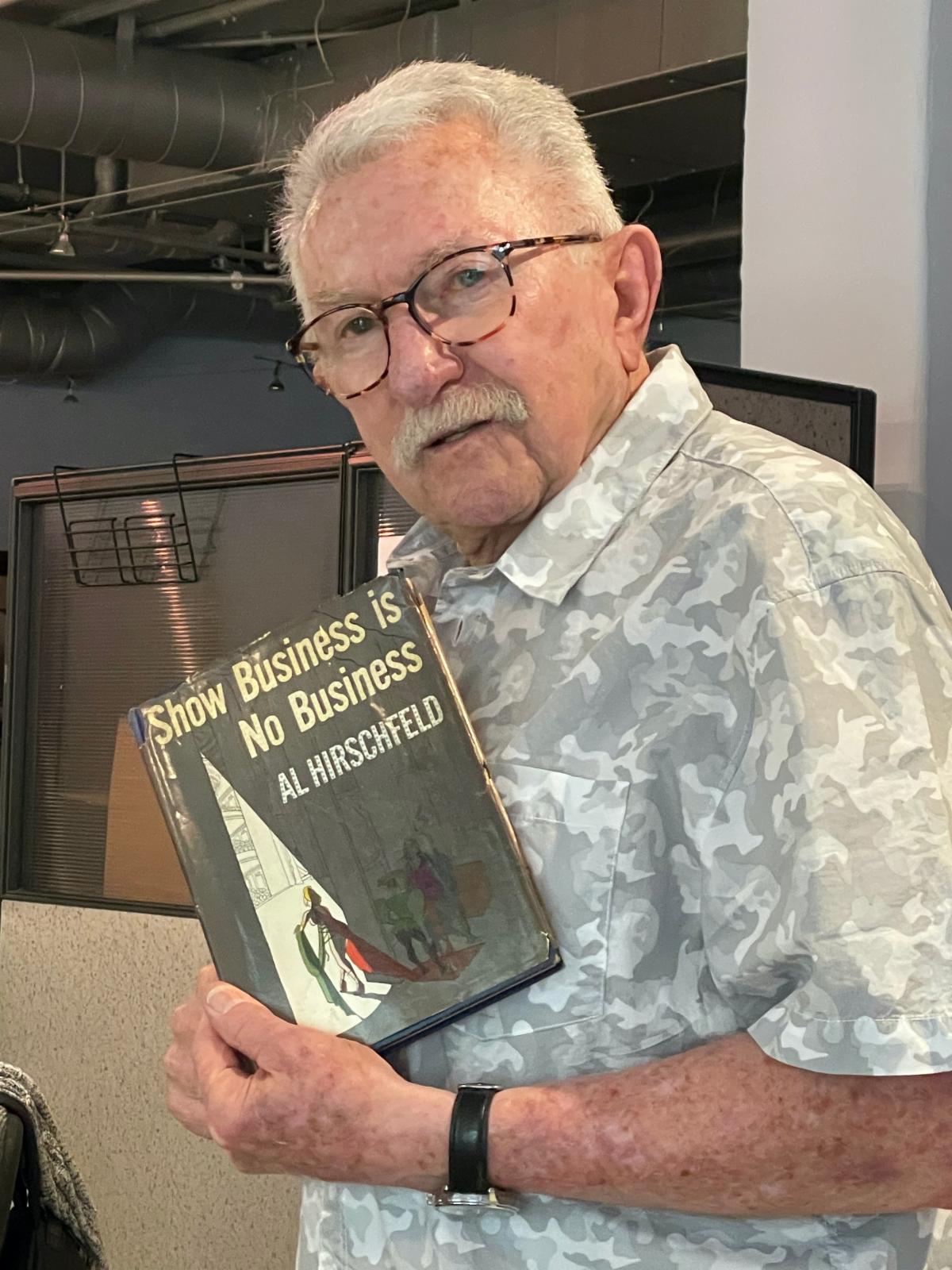
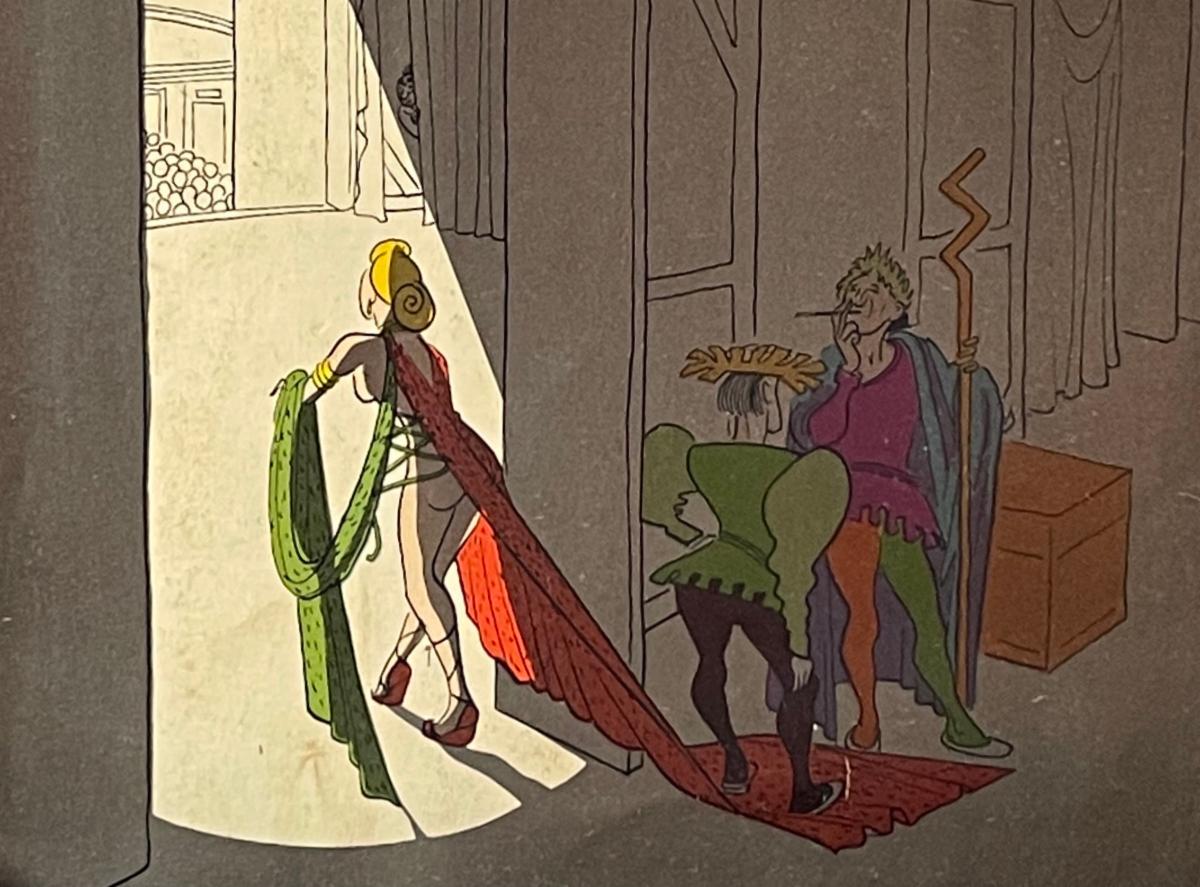
     Before you get too excited, let me explain. Many years ago, back in 1951, a very prominent guy named Al Hirschfeld decided it was time to put his sarcastic wit into book form. As a matter of fact, in his field of endeavor, Mr. Hirschfeld—American caricaturist best known for his black and white portraits of celebrities and Broadway stars—had become arguably the most celebrated character artist of his era, dating back to 1922; Shubert Alley was his stomping grounds.
     In Al Hirschfeld's era, he was a known commodity to any and all who were dreaming the dream of becoming a Broadway celebrity, as well as all those who had arrived and were already living the dream of dreams of this unreal environment. As S.J. Perelman was known to say, “You’ll know you really arrived when you’ve had your 'punim'* sketched by my friend, Al Hirschfeld”.
*This Yiddish word is more specifically used, most often by grandparents, to endearingly talk about someone's sweet face. Things you might hear at Passover dinner include "What a punim!"
It wasn’t until 1956 that (not yet known as) "da harv" first read:
"da harv" today, 2021
Photo by: da wife, Cathy Kalmenson
     Back home from serving during the “Korean Conflict”, which ended at 9:00 PM, July 27, 1953… And then without warning the year became 1955, without any monumental thoughts of what I was about to grow up and become, the dictates of this book by Al Hirschfeld began my indoctrination. Who, what, where, when, why, nor how, had not yet begun serving personal revelations describing anything the future may be holding for me in forbearance.
     Initially, the book began to feel like a colorful history lesson telling the world about the beginnings of the first theaters of Greece; then without warning the inventive genius of Hirschfeld took hold. His thoughts broke the ice which had been sealed shut by my surroundings. Al said, and I quote: “The Broadway Theatre is a real-estate development in art. The owners of the theatres and the producers of the shows that fill them have nothing in common except a lease. Theaters are unpredictable personalities of the current shows playing in them.”
     In other words, the audience pays the bills, and the audience will tell you what you have creatively succeeded in doing—or without mercy telling you what a piece of crap you have delved into. And in the book, the beat goes on. When Al says “Show Business is No Business”, he elaborates in no uncertain terms: you can’t treat it as a business, not if you intend to remain the creative soul God intended you to be in the first place or continue to remain for the balance of the life you weren’t responsible to receive in the beginning.
     Think about what I am about to decree for you to adhere to.
“Show business, and just about any form of creativity touching any part of what we refer to as the biz, is a condition of the heart”. Why not just live with it? Facts are facts. Does any of it make any real sense? Not really. Man or woman, are there any of you out there who hasn’t mentioned how wonderful it would be if only they could catch a break?
     So here I sit re-reading a book that entered my life some sixty-six years ago. Each and every day of my creative life I marvel at the electronic changes taking place in the world we live in. My creative premises have been accepted by more people than I could have ever imagined on the day when I found myself disembarking from that very long trip across the Pacific on my way home from the far east.
     On that day, twenty-five hundred of us not only had the same uniforms in common, each and every man thanked God for the safety he graciously awarded. And again, thinking back, wasn’t that my first real experience with show business? Wasn’t that my first real experience taking part in what I fervently believe to be a true crapshoot.
     I’ve read the works of many men and women I got to know but never met, who each in our own way had similarly asked a very personal question:  
Why was I spared and blessed?
That’s life, I guess
Maybe life is show business
You never know
What you’re about to get
Be creative
For all family and friends
Let them surround you
Help them wave their flag
And yours as well
Tomorrow will be a good day
Just like show business
We’ll throw the masks away

HK
Image(s) Source: Google Images

Sunday, May 9, 2021

A Dream

Oh boy, did I dream a dream I really liked...
 
     The other day I was thinking (now that in itself is a concept). These are my own personal categories of dreams, developed by many years of living, and attempting to be positive at the most trying periods of time. I doubt many of you out there haven't experienced a bad dream now and then.
     Today, more than any other time in my life, I find myself desperately attempting the removal of the average things life keeps offering up. Plainly speaking, at the highest level a human may achieve we all remain in search of goals in what to date remains seemingly out of our reach.
     Before continuing to read, please imbibe a genius’s discriminating words from his glorious observations of life as he alone perceived it to be. I speak of a man; an Irishman I knew but never met, James Joyce.
James Joyce quotes from his novel, Ulysses:
 
“Think you're escaping and run into yourself. Longest way round is the shortest way home.”

“Every life is in many days, day after day. We walk through ourselves, meeting robbers, ghosts, giants, old men, young men, wives, widows, brothers-in-love, but always meeting ourselves.”

 “To learn one must be humble. But life is the great teacher.”
Molly Bloom's Soliloquy: “...I was a Flower of the mountain yes when I put the rose in my hair like the Andalusian girls used or shall I wear a red yes and how he kissed me under the Moorish wall and I thought well as well him as another and then I asked him with my eyes to ask again yes and then he asked me would I yes to say yes my mountain flower and first I put my arms around him yes and drew him down to me so he could feel my breasts all perfume yes and his heart was going like mad and yes I said yes I will Yes.”

- All from the pen of James Joyce -
     He spoke then, and they all listened to his words of love as he depicted it was, or should be, and he prayed —though he had disclaimed himself from his rightful rearing as a Catholic in his country of Ireland. James Joyce knew in his heart he would one day become a Catholic again —if only in fact he was the only other to know his heart remained open and truthful influencing the words he so gave the world.
     They say James Joyce was one of the first true modernist writers of his time. His credo was to say yes to life, with or without reservations for what it might or might not deliver. No minor truths were to be kept from his readers' reach. James Joyce the scripter wasn’t a man of algorisms. He was driven by the truth of, and from his heart, and the rich overly and discernable use of alcohol. He died at age fifty-nine.

     Today, that guy, da harv, exists and creates his dreams within what he allows himself. His is an abstract "peace" while at the same time of life bearing a deep mistrust for those who choose to think for him; today for his children and new generations to come. 
     When da harv dreams his wonderful dreams, they come free form, void of mitigation, and free of judgments; never with a political bent driven by spirals, trying desperately to stay aloof from those in my employ or life’s work, in their sacred attempts at telling me what I should or shouldn’t be thinking.
 
…And if you like, a touch more about James Joyce:
     “James Joyce was born in Dublin in 1882, the oldest of ten children in a Catholic family. He attended Jesuit schools and, in 1904, moved first to Trieste, then Paris, with Nora Barnacle; they married in 1931. After publishing his first novel. In 1916, Joyce developed glaucoma, and his eyesight steadily diminished for the rest of his life. His seminal novel Ulysses was published by his friend Sylvia Beach out of her Paris bookstore.”
Source: https://www.mhpbooks.com/books/the-dead/
     Often, but not told and understood by, our youth of today is beautifully responsible for the endearing successes of the vibrant constant searching of our American intellectual expatriates of the very late and early years of the nineteen-hundreds.
     Like so many literary strugglers before he arrived, James Joyce was in his own constant search. Paris became truly his city of lights. Sylvia Beach was a glistening tribute to those creatives who had the courage to venture forth from their own beginnings in Ireland. Joyce considered Sylvia Beach not only beneficial as his publisher but his financial backer during his most lean years.

The immigrants he loved dearly
His books treasured sincerely
Taking this poor lad
On trips around worlds
He dreamed of
Alas, he never had
All those places
Above all the people
Not seeing them
Yet seeing them
Come to life
If only when
In his life
He’s living a dream

HK
Image(s) Source: Google Images

Sunday, May 2, 2021

...And I said:
 
        Wow— I began almost as usual, for me these days, in the middle of a thought pattern. Always, each and every day seemingly slip by faster and faster for me. Back to business... da harv here caring less and less about formalities. Truth be told, I’ve become more and more of a "blah blah blah" writer. Kinda like shooting from the hip.

        Reporting as usual to people whom I imagine are listening to what I have to say, while most of the time really not caring whether they are or aren’t. I use the term "listening" because I honestly see them right there with me, either asking me a question or seeking my advice. The fact is, imagining is what I have learned to do well in this life of mine. Often I find myself freewheeling along with an associate, friend, actor, or actress, past or present at my side sharing or merely spending their time with me while in the process of imagining together.
 
        In my mind’s eye, I am the world's greatest name-dropper. Actually, let's change it to read: I am the second greatest name-dropper of all time. The late Gary Owens was in reality the number one perpetrator. Gary and I on occasion enjoyed our little private conversations about a variety of people we had known. "You know, Harvey, between the two of us we know everybody." I can see and hear Gary leaning forward and saying to me, “You do know, Harvey, she really wasn’t a good person to work with”.
        …and as I began, "and as I said": It's very late in a very normal workday. The phone rang on my library intercom, my associate, *Newlee, was on the line letting me know she was leaving for the day. “Thank you”, I said, “and God bless you, Tiny Tim.” We both laughed together, and she was gone.

*Editor's Note: When Harvey is immersed in his writing, he disregards spelling... even the spelling of his beloved associate's name, Nulee.
        My dad must have been smiling down at me; I had learned from him the importance of starting and ending each day with a smile. My library and my books always have a way of breathing new breaths into a tiring moment. In "A Christmas Carol", by Charles Dickens, the final lines were usually delivered by Tiny Tim: "God bless us all!"
And one more thing:
        All those books...how important and even sacred these books have become for me during all these years. If there was only some way we could transplant all those books into the minds of all the children who have missed being taught during this horrible downtime.

HK

Sunday, April 25, 2021

Notes on a page...

NOTES ON A PAGE, WITHOUT RAGE
 
Hold on to it
It came upon me
New and bright
Then eyes opened
Savoring yesterday’s delight
Enjoyable fleeting
My own moment or two
 
Feet firmly planted
Stepping down from my bed
Craving remembrance
Of my dearest dream ever
Struggling to recapture
My momentary delight 
Then a blink
Reality of the day
Where did it go
Only a dream
I know
Done it before
Like many
Wanting it to last
Needing much more
I loved my dream
Ever praying for its encore
I’ll try again tonight
Closing my eyes
Thoughts traveling back
With smiles and sounds
Echoing of an era
When teachers weren’t clowns
My dreams were of baseball
Playing and winning
Traveling to every nook and cranny
To ballparks all over towns and cities
Everywhere we went
People cheering and booing
When games came to an end
All the neighborhood people
Stood and cheered for us all
We all shook hands
Then we were gone
It wasn’t a dream
When I played as a very young man
It was the way we were
In almost every town
I heard a new word yesterday
Systemic
My mom and dad never said it
Truth be told
I don’t like the way it sounds
Only the words,
“Home is where the heart is”
Uttered by teachers
Not paid to be clowns
 
Playing the game
Now long gone
But like mom and dad
Good stuff lingers on
 
My dad took me to see Jackie Robinson
Maybe I am systemic
Cause the beat in my heart
Still goes on
In voice casting
Cathy and da harv cast winners
It’s not how you look
IT’S HOW YOU SOUND!
 
- Harvey Kalmenson –
Image(s) Source: Google

Sunday, April 18, 2021

Out of Necessity

"Out of necessity: History, explained to a child"
To his adoring brood, Abe speaks of biblical facts:
Our elected officials
In service of
We who are free
Power driven classic wastrels they
They sit while pondering
Lacking knowledge to share
Void of imagination
Boredom reeks
Another day's performance
Bearing an infamous stink
Pernicious ways
Shared without care
These were selected brethren
Making promises they would not keep
What must we do Father
Abe’s eldest asks
Why not read that lyric to them, suggested good wife Mary Todd
The one your friend, da harv, wrote to you
When he too
Felt the die was cast
Good idea was Abe’s reply
 
"Vote them out, that’s what America's all about"
They said some bad stuff
Things I didn’t care to hear stuff
Like my country’s not good
Or my flag…take it down
You know, like always the kind of
"make a patriot mad" stuff
Without love, they expound
It’s in my heart to sing now
What the good book explains
I have to sing now
What this patriot has to say 
-hk-
 
…and Mary mused, "da harv must set it to music one day." "He will, I am sure", thought Mr. Lincoln. And, of course, da harv did.
One day it will be sung as a reminder to all who are elected by us; you’re here to serve us, certainly not yourselves. It is our will, that will to be served.

Show us what you got
Do what you say
Tomorrow comes quickly
We can vote you out
God willing
That’s what America is all about.
Source for images: Google